Wiba Anung translates to “early star” in Anishinaabemowin and is a partnership between Michigan State University and the Inter-Tribal Council of Michigan. The Wiba Anung partnership started in 2005 and involves expertise and collaborative efforts between researchers, parents, early childhood programs and staff, and elders in tribal communities. This collaborative relationship was formed to serve Michigan American Indian children and their families. Work from this partnership includes research, training, and information gathering that are essential for identifying strengths in tribal early childhood programs as well as areas of concern. This partnership is a strong advocate for effective data use that supports the health and well-being of Indigenous children and families in Michigan. The work of Wiba Anung is a critical contribution to health equity efforts in the state. This relationship is rooted in regional Anishinaabe cultural contexts and is innovative in its contributions to scientific rigor by highlighting specific mechanisms by which cultural practices support children’s development.
The name, Wiba Anung, shared by our friend, Arnie Parish, reflects the heart of our work. It was chosen to represent the young children served through the Inter-Tribal Council of Michigan’s Head Start program, conceptualizing them as “stars.” In this way, the stars symbolize the children themselves, centering their importance and guiding role in all that we do. As with many Indigenous language terms, variations in spelling and translation exist, and we recognize that the full meaning doesn’t always translate perfectly into English.
Our Team
Founding Members
Jessica Barnes-Najor
Director for Community Partnership
Office for Public Engagement and Scholarship
University Outreach and Engagement
Michigan State University
Jessica V. Barnes-Najor, Ph.D., is the director for Community Partnerships, Office for Public Engagement and Scholarship, Michigan State University. She is a developmental psychologist with a specialization in applied developmental science. Her work focuses on establishing research partnerships and promoting community-engaged research.
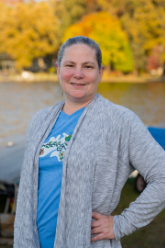
Ann Cameron
Director
Head Start Program
Inter-Tribal Council of Michigan
Ann Cameron is a tribal citizen of the Bay Mills Indian Community. She is a member of the American Indian Alaska Native Head Start Research Center Steering Committee and is a long-standing member of the National Indian Head Start Directors Association Board of Directors.
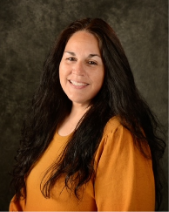
Lisa Martin
Senior Research Associate
Department of International Health
Johns Hopkins Center for Indigenous Health
Lisa Martin, MPH, is a member of the Ojibwe Nation and enrolled in the Sault Ste. Marie Tribe of Chippewa Indians. Lisa is a Senior Research Associate at the Center for Indigenous Health at Johns Hopkins University, Bloomberg School of Public Health. Her current role is to support Family Spirit home visitation curriculum content development and research projects associated with Family Spirit implementation. She is a key lead on the development of the Family Spirit Thrive Curriculum, a member of the +Language is Medicine development and implementation team, and a PI of the Family Spirit Strengths RCT. She has extensive experience managing a wide range of projects in partnership with Indigenous communities. In addition, she is a member of the Tribal Early Childhood Research Center (TRC) Steering Committee and has devoted a significant part of her professional career co-creating implementation of evaluation and research studies in partnership with Indigenous communities. She received her MPH from the University of Arizona in 2003.
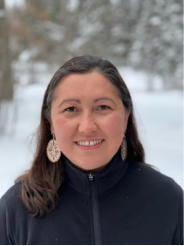
Current Members
Michelle Cypher
Education Resource Specialist
University Outreach and Engagement
Michigan State University Opioid Prevention and Education Network
Michelle Cypher is a certified teacher in Michigan with nearly a decade of experience in early childhood and elementary education. After teaching in the classroom, she transitioned into curriculum development to make a broader impact on young learners and the educators who serve them. She currently works as an Educational Resource Specialist through AmeriCorps VISTA at Michigan State University, where she collaborates with the Wiba Anung team. In her role, Michelle leads the development of an early childhood health curriculum rooted in Anishinaabe teachings and aligned with the 13 Moons lunar calendar. This initiative supports Indigenous Head Start programs and tribal communities throughout Michigan. Outside of her professional work, Michelle is a proud mother of two teenage boys. She enjoys horseback riding, kayaking, gardening, reading, writing, and engaging in various creative activities.
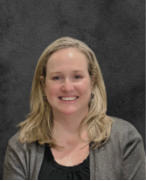
Danielle Gartner
Assistant Professor
Department of Epidemiology & Biostatistics
College of Human Medicine
Michigan State University
Danielle R. Gartner (Sault Ste. Marie Tribe of Chippewa Indians) is a mother, sister, daughter, auntie, and relative. As an academic, she identifies as a population health scientist whose work recognizes and supports Indigenous self-determination, sovereignty, and resurgence. Dr. Gartner’s projects have been funded by the National Institutes of Health, the Robert Wood Johnson Foundation, and the Michigan Health Endowment Fund.
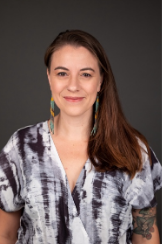
Heather Howard
Associate Professor
Department of Anthropology
College of Social Science
Michigan State University
Heather Howard is an Associate Professor of Anthropology at Michigan State University. She works on issues with policy and applied implications for the equity and sustainability of Indigenous peoples’ health, sovereignty, intergenerational knowledge sharing and cultural well-being. Her work centers on collaborative, community-driven, and participatory approaches to research that promote Indigenous knowledge frameworks in scholarship and research that is meaningful to community.
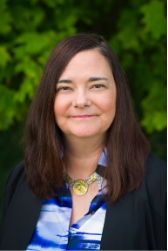
Patrick Koval
PhD Candidate
Department of Biostatistics
School of Public Health
Boston University
Patrick William Koval is a fourth-year Ph.D. student in Biostatistics at Boston University. He serves as Wiba Anung’s webmaster. His dissertation concerns the effects of underreporting on the epidemiological analysis of suicide.
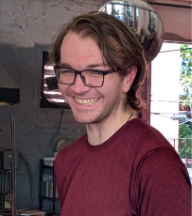
Amanda Rinna
Education & Disabilities Services Manager
Head Start Program
Inter-Tribal Council of Michigan
Amanda is enrolled in the Sault Ste. Marie Tribe of Chippewa Indians. She received her bachelor’s in early childhood education from Lake Superior State University. She is a certified Indigenous Breastfeeding Counselor, and a certified Indigenous Community Doula. Amanda’s work with Wiba Anung focuses on writing curriculum content for Head Start and Home Visiting.
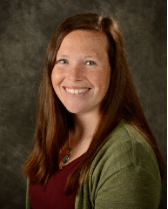
Jessica S. Saucedo
PhD Candidate
Ecological/Community Psychology Program
Department of Psychology
Michigan State University
Jessica S. Saucedo, MA, is a PhD candidate in Community Psychology at Michigan State University. She is a descendant of the Yaqui of Sonora, Mexico, and the Cora of Nayarit, Mexico. Jessica serves as a project manager for various Wiba Anung projects focused on documenting how Indigenous cultures support children’s well-being and development. Her dissertation is focused on how families and communities support Indigenous children’s growth across cultural, relational, and structural contexts.
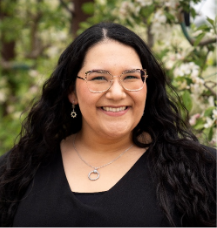
Rosebud Bear Schneider
Co-Director
Education and Engagement
Keep Growing Detroit
Rosebud is an enrolled Citizen of the Lac Courte Oreilles Band of Lake Superior Chippewa Indians, recognized descendant of the Lac Du Flambeau Band of Lake Superior Chippewas and Eastern Shawnee Tribe of Oklahoma, and Purepecha peoples.
Born and raised in Southwest Detroit, she is a farmer, producer and community organizer. Her involvement with indigenous food sovereignty work spans over the last 15 years; first as a breastfeeding educator and community health worker and home visitor with Healthy Start and WIC and then as a farmer and nutrition educator with the Sacred Roots food sovereignty project in Detroit. Her time with Sacred Roots illuminated the passion Rosebud has to feed and care for her community.
She also expanded her roots throughout the Detroit Agriculture network as a farmer and former board member at Keep Growing Detroit and completed MSU’s Organic Farmers Training Program in 2017.
Rosebud spent three seasons as the market manager, farmer and food producer for Minogin Market and Ziibimijwang, a tribally owned indigenous food hub located in Mackinaw City. She is now the Vice-Chair on the Ziibimijwang Board of Directors.
Currently, she is the co-director of Education and Engagement at Keep Growing Detroit, a non-profit urban farm with the mission to cultivate a food sovereign city where the majority of fruits and vegetables consumed by Detroiters are grown by residents within the city’s limits.
As an Anishinaabe farmer and producer here in this community, she continues to provide traditional foods across Turtle Island. Rosebud remains dedicated to supporting the health and wellness of our community by educating on the importance of revitalizing Indigenous foodways. Her lifelong goal is to give her children and the coming generations the knowledge and skills to live a well-rounded, healthy life woven with our ancestral ways.
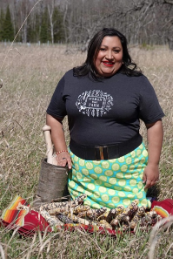
Beedoskah Stonefish
Master’s Student
Department of Epidemiology & Biostatistics
College of Human Medicine
Michigan State University
Beedoskah develops curricular content for tribal Head Start and Home Visiting programs. She also conducts local and national research to explore how Indigenous methods can be used to strengthen our understanding of Indigenous health and well-being. Beedoskah received her Bachelor of Science in Human Biology from Michigan State University. She is of the Grand Traverse Band of Ottawa and Chippewa Indians and Bkejwanong First Nations.
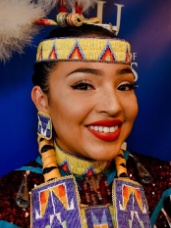
Emma Thexton
Undergraduate Student
Environmental Studies & Sustainability
Department of Community Sustainability
College of Agriculture & Natural Resources
Michigan State University
Emma Thexton is a junior at MSU pursuing a degree in Environmental Studies and Sustainability, with a focus in environmental public policy. She works as an undergraduate research assistant with the Wiba Anung team, helping to collect data for the food resource guides. In her free time, Emma enjoys hiking in the outdoors and thrifting fun trinkets!
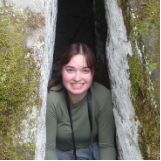
Chelsea Wentworth
Assistant Professor
Department of Family Medicine
College of Human Medicine
Michigan State University
Dr. Wentworth is a community-engaged scholar focused on developing research products to shape public policy and improve health equity. Her research examines nutrition security, patient/provider/community communication, and the social determinants that impact health outcomes for women and children in partnership with Michigan’s Anishinaabae communities, ni-Vanuatu communities in the South Pacific and with young women in Michigan. She is a mother, a gardener and enjoys spending time with her family on the lakes of Northern Michigan.
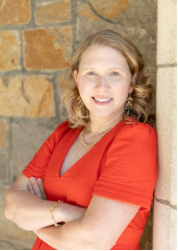
Members Emeritae
Maeve Kuhlman
Education Resource Specialist
University Outreach and Engagement
Michigan State University Opioid Prevention and Education Network
Maeve Kuhlman, MS Global Health, serves as an AmeriCorps VISTA member at Michigan State University as an education research specialist. In her current role, Maeve collaborates with interdisciplinary project stakeholders to develop early childhood nutrition education curriculum for the Wiba Anung (Early Star) Home Visiting program. A true community advocate, Maeve goes beyond the basics by creating and disseminating culturally affirming lessons and educational materials for participants of Wiba Anung early childhood programs, which are strongly rooted in principles of contemporary food sovereignty. These initiatives not only prioritize the health and well-being of Indigenous children and families, but also reflect Maeve’s profound commitment to ensuring that health resources are made accessible to those in need.